
Ever spent 45 minutes wrestling with overgrown boxwoods only to end up with wavy, lopsided shrubs that look like they survived a squirrel convention? You’re not alone. Most homeowners grab a hedge trimmer like it’s a hair clipper—point and pray—but that’s how you get Frankenhedges.
In this guide, I’ll walk you through exactly how to use a hedge trimmer the right way—safely, efficiently, and with results that’ll make your neighbors do a double take. Based on 12+ years as a landscape contractor (and one memorable fail involving a 7-foot laurel and a misplaced extension cord), you’ll learn:
- The #1 mistake that causes uneven cuts (it’s not user error—it’s technique)
- Step-by-step trimming methods for different hedge types
- Essential safety gear most DIYers skip (at their peril)
- When to sharpen blades—and why dull ones are fire hazards
Table of Contents
- Why Proper Hedge Trimming Actually Matters
- How to Use a Hedge Trimmer: Step-by-Step
- 7 Pro Tips Nobody Tells You About Hedge Trimmers
- Case Study: From Jungle to Jewel in 90 Minutes
- FAQs: Your Burning Hedge Trimmer Questions—Answered
Key Takeaways
- Always wear ANSI-approved safety goggles, gloves, and hearing protection—OSHA reports 37,000+ landscaping injuries annually, many from flying debris.
- Trim hedges at a slight outward taper (wider at base) to prevent “leggy” growth from lack of sunlight.
- Never force the blade—let the trimmer do the work. Forcing causes kickback and dulls teeth faster.
- Electric and battery models are quieter and lighter; gas offers power for thick, woody stems over ¾ inch.
- Sharpen blades every 10–15 hours of use or when cuts look frayed instead of clean.
Why Proper Hedge Trimming Actually Matters
Trimming isn’t just about curb appeal (though a neat hedge can boost property value by up to 7%, per the National Association of Realtors). It’s plant healthcare. Overgrown hedges develop dense outer canopies that block sunlight from reaching inner branches, causing dieback, fungal issues, and weak structure.
I once showed up to a client’s home where a “quick tidy” turned into emergency surgery—their yew hedge had rot in the core because they’d been shearing it flat for years like a green wall. We had to cut it back 18 inches just to save it.
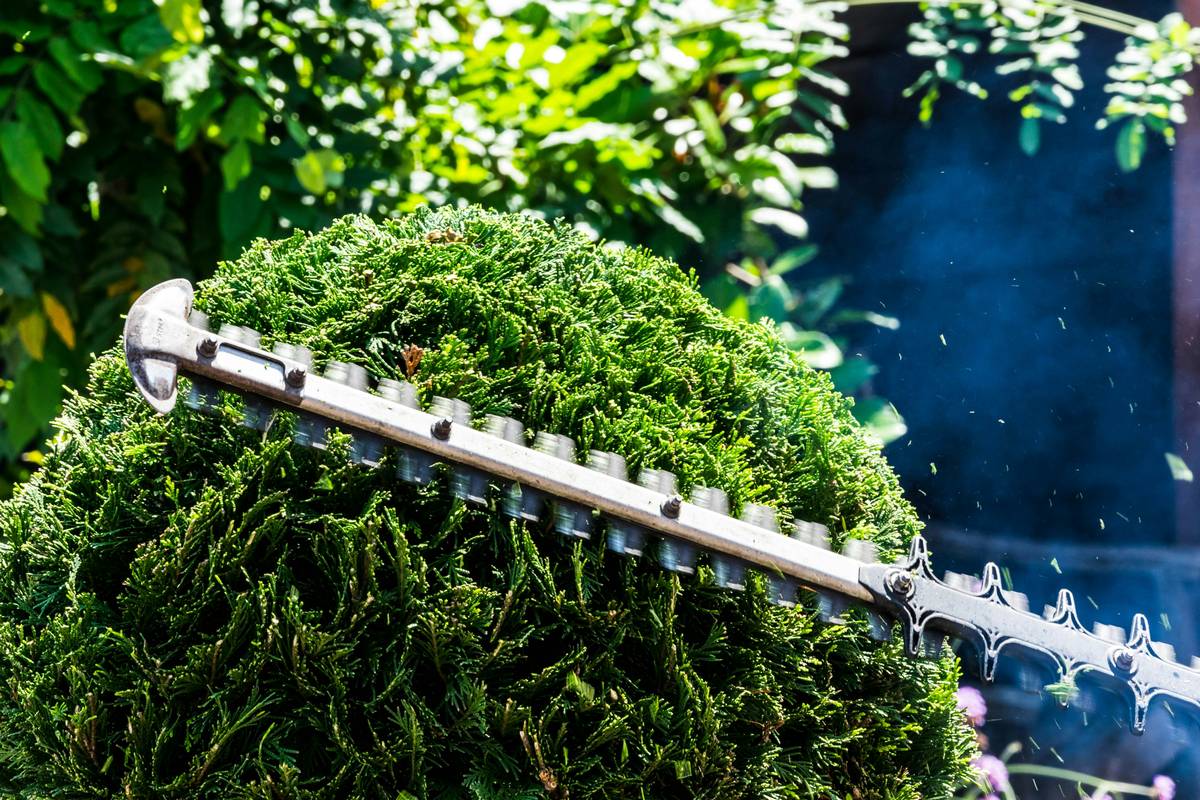
And let’s talk safety: The CPSC estimates over 5,000 annual ER visits from hedge trimmer accidents—mostly lacerations from kickback or slips. One careless pass = stitches. Not worth it.
How to Use a Hedge Trimmer: Step-by-Step
Step 1: Prep Your Gear (Yes, Even If You’re “Just Doing the Front”)
Optimist You: “I’ll be done before my coffee gets cold!”
Grumpy You: “Fine—but only if I don’t have to explain why I’m missing fingers at trivia night.”
- Safety first: ANSI Z87.1-rated goggles, cut-resistant gloves (like Mechanix Wear), and hearing protection (trimmers hit 90–105 dB).
- Check your tool: Blades should move freely. Clear debris from vents. For battery models, ensure ≥80% charge. Gas? Fresh fuel mix (no ethanol-blended gas—it gels in carburetors).
- Clear the zone: Remove toys, hoses, or lawn ornaments. Keep kids/pets indoors.
Step 2: Choose Your Cutting Technique
Not all hedges are created equal:
- Formal hedges (boxwood, yew): Use smooth, horizontal sweeps for flat planes. Taper sides slightly outward (think “A-frame,” not rectangle).
- Informal shrubs (hydrangea, lilac): Hand-prune selectively. Never shear—this removes flower buds and creates twiggy messes.
- Tall hedges: Start at the top, work down. Use a tripod ladder rated for outdoor use—never stand on chairs or unstable surfaces.
Step 3: Trim With Rhythm, Not Force
Hold the trimmer with both hands. Let the blades glide through foliage—don’t push. Imagine you’re combing hair, not chopping wood. Move slowly (2–3 inches per second) to avoid tearing stems.
Step 4: Clean Up & Maintain
Brush off sap/debris with a stiff nylon brush (never metal—it nicks blades). Wipe with a cloth dampened in denatured alcohol to disinfect. Store in a dry place.
7 Pro Tips Nobody Tells You About Hedge Trimmers
- Trim in cool morning hours—heat stress + fresh cuts = wilt city.
- Avoid wet foliage—water weighs down branches, distorts shape, and clogs blades.
- Mark your lines with string guides for perfectly straight edges (pro landscapers swear by this).
- Sharpen after every major job using a file jig or diamond stone. Dull blades crush stems instead of cutting, inviting disease.
- Gas trimmers need 2-cycle oil mixed at 50:1. Too little oil = seized engine. Too much = fouled spark plug.
- Battery life hack: Keep a spare charged pack in a cooler—heat kills lithium-ion performance.
- Never tip the trimmer vertically while running—oil/gas can leak into air filter (gas models) or damage motor (electric).
Case Study: From Jungle to Jewel in 90 Minutes
Last spring, I helped my sister rescue her neglected privet hedge—it was 8 feet tall, bare at the base, and tangled with vines. Here’s what we did:
- Day 1: Removed dead wood by hand, then trimmed top 12 inches to reduce height gradually (never remove >⅓ of growth at once).
- Tool: Used a 20V EGO cordless trimmer (lightweight, quiet, enough torque for ½-inch stems).
- Technique: Created a gentle 10-degree outward taper on sides using a carpenter’s level as visual guide.
- Result: Within 6 weeks, new growth filled the base. By summer, it looked intentional—not accidental.
Moral? Patience + precision beats brute force every time.
FAQs: Your Burning Hedge Trimmer Questions—Answered
Can I use a hedge trimmer on small trees?
No. Hedge trimmers are designed for soft, green growth under ¾ inch diameter. Use loppers or a pruning saw for woody stems.
Why does my trimmer vibrate so much?
Usually unbalanced or bent blades. Stop immediately—continued use can damage the motor. Check for bent teeth; replace if needed.
How often should I trim hedges?
Formal hedges: Every 4–6 weeks in growing season (spring–early fall). Informal shrubs: Once after flowering or in late winter.
Are cordless trimmers powerful enough?
Modern 40V–60V models (like Greenworks Pro or DeWalt) handle most residential jobs. Save gas for commercial-grade hedges over 6 feet tall.
What’s the worst tip I’ve ever heard?
“Just spray WD-40 on the blades to lubricate them.” Don’t. It attracts dust and gumming sap. Use bar-and-chain oil or manufacturer-recommended lubricant.
Final Thoughts
Knowing how to use a hedge trimmer isn’t about owning fancy gear—it’s about respecting the tool, the plant, and your own safety. Do it right, and you’ll spend less time fixing mistakes and more time sipping lemonade beside hedges so crisp, they look photoshopped.
Now go forth—and may your blades stay sharp and your thumbs intact.
Like a Tamagotchi, your hedge needs consistent care—not occasional panic trims.
Snip-snip, steady hand,
Green walls bow to your command—
Summer’s perfect frame.