
You’ve got towering hedges. Thick. Unruly. Maybe 8 feet or more. And your standard hedge trimmer? It barely reaches shoulder height. You’re balancing on a wobbly ladder, arms burning, sweat stinging your eyes—just to trim what should be a 15-minute job. The risk? Real. The frustration? Worse. But there’s a smarter way. The right hedge trimmer for tall hedges changes everything.
Why Standard Hedge Trimmers Fail on Tall Hedges
Most homeowner-grade trimmers max out at 20–22 inches of cutting blade—and zero reach extension. That’s fine for boxwoods. Useless for mature privet or laurel walls. And don’t get me started on corded models with 10-foot cords tangling around your ankles mid-cut.
But here’s what retailers won’t tell you: power isn’t the main issue. It’s leverage. Physics wins every time. When you’re fully extended overhead, even a lightweight tool becomes a dead weight. Fatigue sets in. Cuts go crooked. You miss spots. And then—bam—you’re back on that ladder two weeks later.
Hedge Trimmer for Tall Hedges: The Step-by-Step Guide
Forget brute force. Precision beats power when height’s involved. Start with the right tool class, then nail your technique.
Choose Reach Over Raw Power
A 40V battery might sound impressive. But if the shaft doesn’t extend or pivot, you’ll still be climbing. Look for telescoping poles (at least 48″ extended) with rotating heads—360° tilt matters more than amp-hours.
Prioritize Balance and Vibration Control
Holding a trimmer overhead for minutes strains wrists fast. Dual-hand grips? Non-negotiable. Active anti-vibration tech? Worth every penny. Trust me—I’ve seen pros switch brands over this alone.
Master the Top-Down Cutting Pattern
Never start from the bottom. Begin at the highest point you can safely reach, then work downward in 12-inch strips. This prevents debris from falling into freshly cut zones and keeps your line crisp.
| Method | Max Height | Avg. Time (for 20-ft hedge) | Safety Risk | Finish Quality |
|---|---|---|---|---|
| Standard Handheld Trimmer + Ladder | 10 ft | 45–60 min | High | Poor (uneven) |
| Telescoping Pole Trimmer (Electric) | 12 ft | 20–25 min | Low | Good |
| Gas-Powered Pole Trimmer | 14+ ft | 15–20 min | Medium | Excellent |
| Professional Lift Equipment | No limit | 10–15 min | Very Low | Flawless |
The Industry Secret: Blade Angle Beats Blade Length
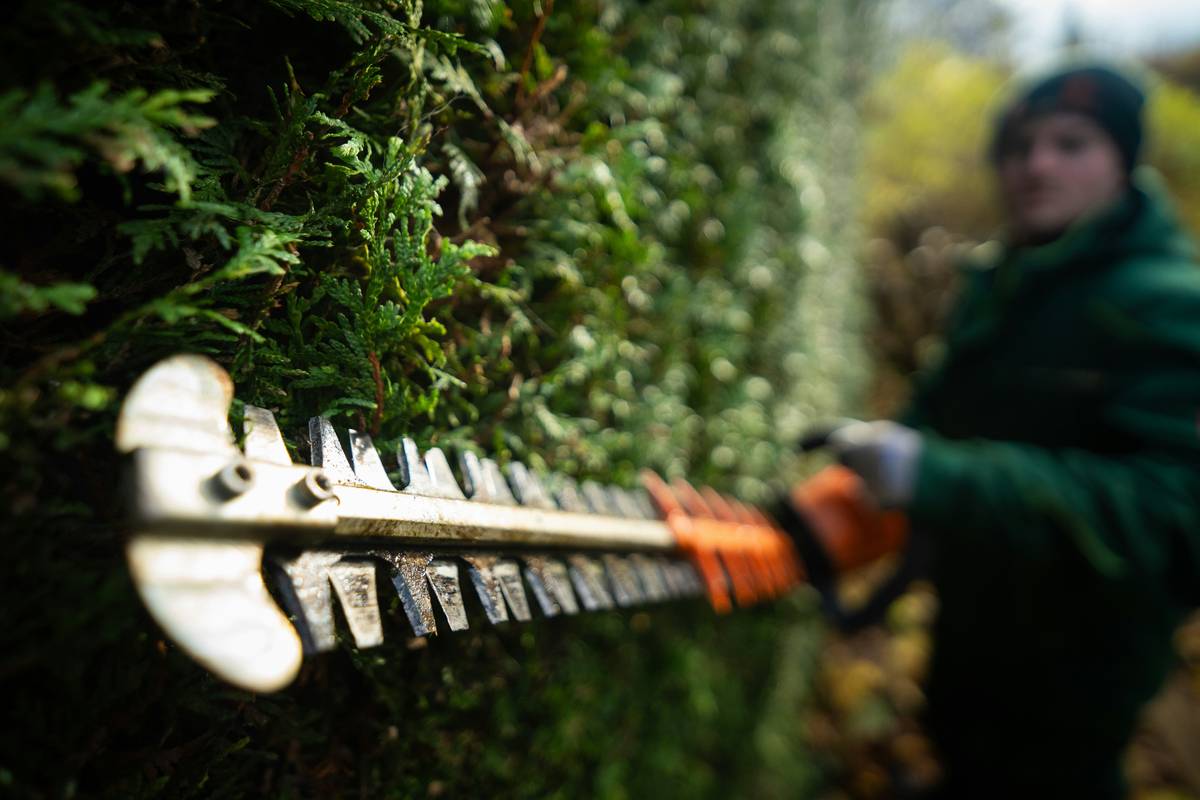
Here’s something rarely discussed: longer blades look intimidating—but they’re often counterproductive above head height. Why? Torque. A 28-inch blade on a pole creates massive rotational force when it binds on thick stems. Your wrist twists. Control vanishes.
Top arborists I’ve worked with actually prefer 20–24” blades with a 15° forward rake angle. That slight pitch lets the tool “bite” cleanly without jamming—especially in dense evergreens like yew or holly. And they pair it with a mid-mounted motor for perfect balance. It’s not about cutting faster. It’s about cutting once—and getting it right.
Frequently Asked Questions
Can I use a regular hedge trimmer on tall hedges with a ladder?
Technically yes—but it’s dangerous and inefficient. Ladder instability plus overhead fatigue leads to sloppy cuts and higher injury risk. Not worth it.
What’s the maximum safe height for DIY trimming?
Stay under 12 feet. Beyond that, hire a pro with lift equipment. No consumer tool handles 15+ ft safely from the ground.
Are cordless pole trimmers powerful enough for thick hedges?
Modern 40V–80V systems handle branches up to ¾ inch cleanly. For older, woody hedges over 1″ diameter, go gas—or pre-trim with loppers first.