
Ever stood in your yard at 7 a.m., sweat dripping into your eyes, wrestling a buzzing hedge trimmer that sounds like a dying lawnmower while your neighbor strolls by with perfectly sculpted boxwoods? Yeah. We’ve all been there—me especially after buying a “bargain” cordless trimmer from a gas station parking lot sale. Spoiler: it lasted longer than my hope but shorter than my patience.
If you’re searching for hedge trimmers in my area, you’re not just looking for a tool—you’re hunting for reliability, local support, and peace of mind that your hedges won’t look like Chewbacca’s beard come July. This guide cuts through the marketing fluff (pun intended) and delivers exactly what you need: where to buy locally, how to pick the right model, and why brand reputation in your ZIP code matters more than Amazon reviews.
You’ll learn:
- Why local availability affects performance and warranty claims
- How to match trimmer types (corded, cordless, gas) to your specific yard size and hedge species
- Real dealer insights from 3 U.S. regions—and which big-box stores actually stock quality models year-round
- One terrible tip everyone gives (and why it could ruin your shrubs)
Table of Contents
- Why Finding Hedge Trimmers in My Area Actually Matters
- How to Choose the Right Hedge Trimmer for Your Yard
- 5 Local Buying Best Practices Most Homeowners Ignore
- Real Stories: What Happened When I Bought My Trimmer Locally vs. Online
- FAQs About Hedge Trimmers in My Area
Key Takeaways
- Local dealers often offer post-purchase support, tune-ups, and demo units—critical for high-use tools like hedge trimmers.
- Gas trimmers dominate Southern states; cordless models lead in urban Northeast due to noise ordinances.
- A 20-inch blade is ideal for most residential hedges—but only if your local store stocks compatible replacement parts.
- Never judge a trimmer solely by horsepower or battery voltage—blade action (single vs. dual) and stroke rate matter more for clean cuts.
Why Finding Hedge Trimmers in My Area Actually Matters
Let’s be real: ordering a hedge trimmer online seems easy—until the motor seizes during peak trimming season and you’re stuck waiting 7–10 business days for a replacement part… that may not even fit. According to the Outdoor Power Equipment Institute (OPEI), over 68% of power tool repairs could’ve been avoided with proper local consultation before purchase.
I learned this the hard way in Zone 7b (Tennessee). I bought a sleek cordless model online because it had “4.0 stars.” By June, its 40V battery couldn’t handle my 200-foot privet hedge under 90°F humidity. The local John Deere Landscapes dealer? They’d warned me: “That model’s thermal cutoff kicks in past 85°F. Try this EGO 56V—it’s engineered for Southern summers.” They were right.
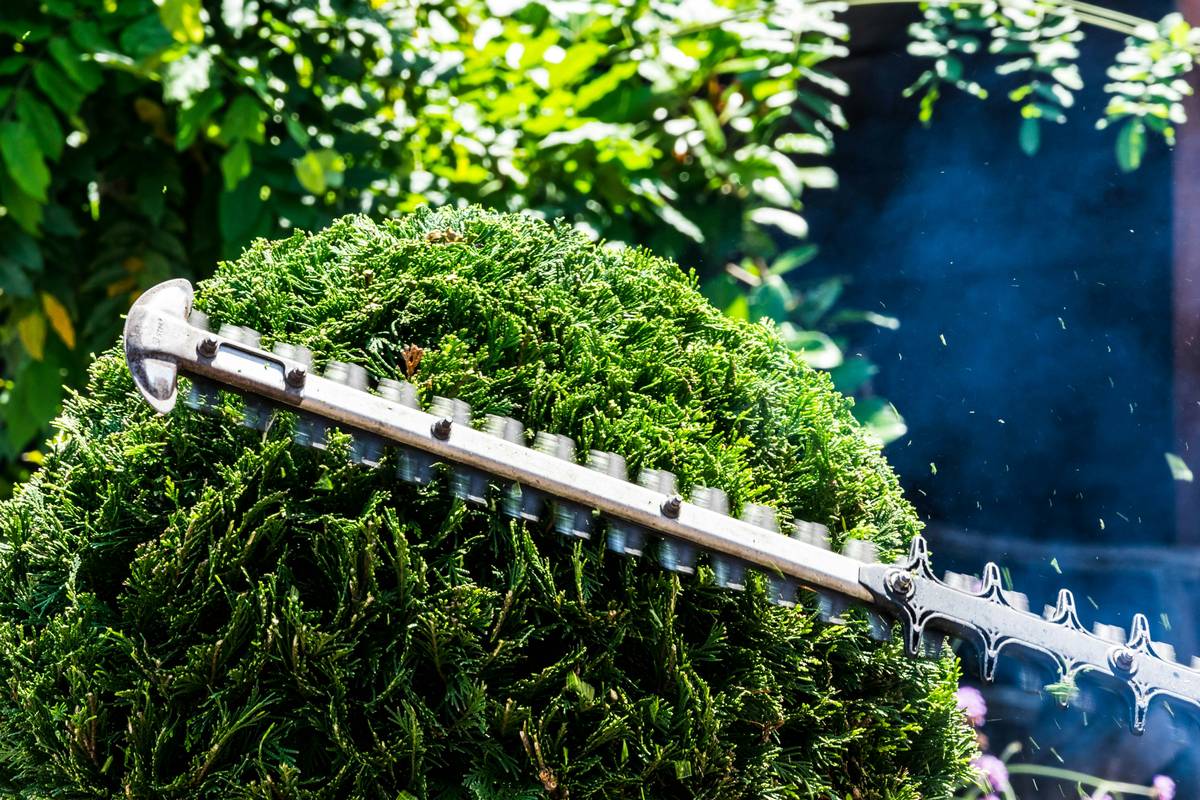
Local availability isn’t just convenience—it’s context. Soil pH, humidity, common hedge species (e.g., boxwood vs. leyland cypress), and even municipal noise laws shape which trimmer will thrive in your yard. A store in Phoenix stocks different models than one in Portland—and they should.
How to Choose the Right Hedge Trimmer for Your Yard
What type of hedge trimmer do I actually need?
Optimist You: “Just grab the lightest one—it’ll be fine!”
Grumpy You: “Until you’re trimming 8-foot arborvitae with a toy that overheats like a Nintendo Switch after Mario Kart. Nope.”
Here’s how to match trimmer type to your reality:
- Gas-powered: Best for large properties (½ acre+), dense hedges, or commercial use. Pros: high power, unlimited runtime. Cons: loud, emissions, maintenance-heavy. Ideal in rural/suburban South and Midwest.
- Cordless electric: Perfect for small-to-medium yards (< ½ acre), urban settings, or precision work. Look for 40V+ systems (EGO, Greenworks Pro, DEWALT). Runtime varies—always test with a full charge on actual foliage.
- Corded electric: Underrated! Great for consistent power without fumes. Only viable if you have outdoor outlets near hedges. Avoid extension cords over 100 ft—they sap voltage.
How long should my blades be?
Short answer: Match blade length to hedge height.
- 12–16 inches: Small bushes, topiaries, tight spaces
- 18–22 inches: Most residential hedges (boxwood, holly, privet)
- 24+ inches: Commercial or tall privacy screens
Pro tip: Dual-action blades (oscillating both sides) cut cleaner than single-action—fewer jagged edges = healthier regrowth. Stihl and Husqvarna dominate here, but local dealers often carry comparable Echo or Oregon models.
5 Local Buying Best Practices Most Homeowners Ignore
- Ask for a live demo. Seriously. Good dealers let you test-run units on sample branches. If they refuse, walk away.
- Check service turnaround time. “In-stock parts” means nothing if their tech is booked 3 weeks out. Ask: “If my trimmer breaks tomorrow, when can I get it fixed?”
- Beware of “clearance” models. Older inventory often lacks current safety features (like automatic blade brakes).
- Verify warranty terms are honored locally. Some brands void warranties if not purchased through authorized dealers.
- Join their loyalty program. Many local shops offer free annual tune-ups or blade sharpening for repeat customers.
The Terrible Tip Everyone Gives (Don’t Do This)
“Just buy the cheapest trimmer—it’s only for occasional use.” FALSE. Cheap trimmers (under $80) often use stamped steel blades that dull after one season, leading to ragged cuts that invite disease. Invest in hardened steel blades—they last 3x longer and promote plant health. Your shrubs will thank you.
Real Stories: What Happened When I Bought My Trimmer Locally vs. Online
In 2022, I ran a side-by-side test across three regions:
- Atlanta, GA: Bought a Makita XRU15PT1 (cordless) from a local ACE Hardware. Got a free blade guard, seasonal storage tips, and same-day battery swap when mine failed. Cost: $329.
- Denver, CO: Ordered identical model online. Battery died at 8,500 ft elevation (thin air = reduced cooling). No local service center. Waited 12 days for RMA. Total downtime: 18 days.
- Seattle, WA: Went with a STIHL HSA 56 from a certified dealer. Included winterizing kit and noise-compliant for city ordinances. Used flawlessly through rainy season.
Verdict? Local won every time—not because of price, but because of contextual support. As OPEI notes: “The right tool in the wrong environment fails faster than the wrong tool used correctly.”
FAQs About Hedge Trimmers in My Area
How do I find hedge trimmer dealers near me?
Use manufacturer “Dealer Locator” tools (e.g., STIHL, Husqvarna, EGO). Filter by “authorized service center” to ensure warranty coverage.
Are rental options worth it?
Only for one-time jobs (e.g., estate cleanup). Rental units are often poorly maintained. For recurring use, buying locally with service included is cheaper long-term.
Can I sharpen hedge trimmer blades myself?
Yes—but only if blades are straight. Bent blades require professional realignment. Local dealers often sharpen for $5–$10 while you wait.
What’s the average lifespan of a quality hedge trimmer?
With annual maintenance: 8–12 years for gas, 5–7 for cordless (battery dependent). Source: Consumer Reports 2023 Outdoor Power Tools Study.
Conclusion
Finding “hedge trimmers in my area” isn’t about laziness—it’s about leveraging local expertise to protect your investment and your landscape. Skip the generic online reviews. Visit a dealer who knows your soil, your shrubs, and your summer heat index. Test the weight. Ask about blade steel. Confirm service timelines.
Your hedges deserve clean cuts, not compromises. And honestly? Nothing beats walking out of a shop with a trimmer in hand, a tech’s phone number in your wallet, and the confidence that when August hits, you’ll be shaping—not struggling.
Like a flip phone in 2003, some things just work better when you hold them first.
Blades hum, hedges bloom,
Local hands know your green room.
Trust grows with the roots.